Where a chair gives out
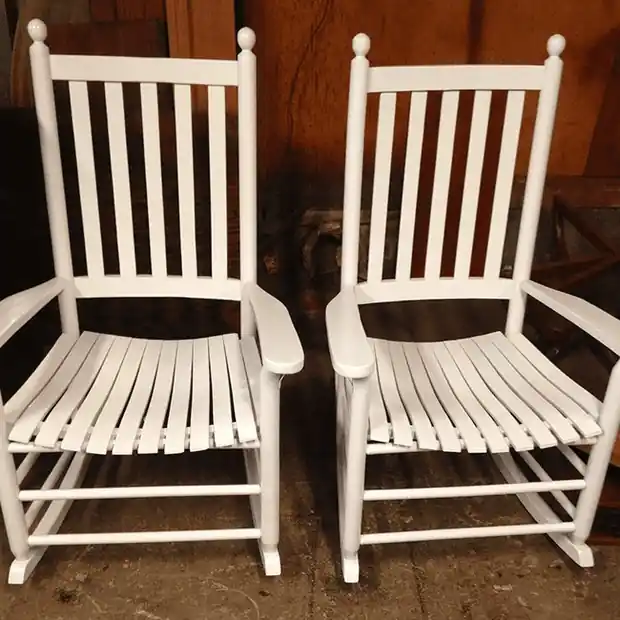
A chair is the hardest-working piece in the house. It takes a person's weight, it rocks, it gets tipped back on two legs and dragged across a floor, so it fails at the joints first. A rung that turns in its hole, a spindle that rattles in the back, a rocker that has started to wobble: those are glue failures, and glue failures are some of the most fixable damage in furniture.
Cane gives out a different way. A cane seat sags, then a strand splits, then another lets go. Once a few strands are broken the rest are carrying a load they were never meant to carry, and the seat is on its way out. David Teegarden's list for the shop names Chair Caning and Chair Repair as two separate jobs, and they are: one is weaving, the other is joinery.
How a chair goes back together
A caned seat starts with cutting out what is left of the old cane and cleaning out the groove or the holes around the frame. The frame is checked for cracks before any new cane goes in, because a fresh seat in a weak frame only breaks again. Depending on how the chair was built, the seat is then rewoven strand by strand or fitted with pressed-in cane set into the groove.
Loose joints get taken apart. Old glue is cleaned out of the socket so the new glue has bare wood to grip, the rung or spindle is reglued and clamped square, and a worn tenon is built back up so it fits snug instead of being packed with filler. A rocking chair gets its rockers checked the same way, since a wobble there usually traces back to a joint rather than the rocker itself.
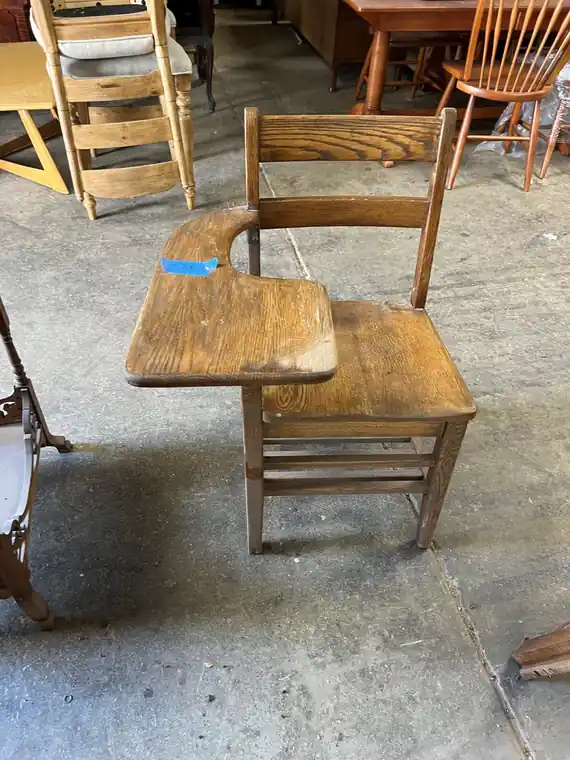
If a spindle or rung is cracked through or missing, a new one is cut in matching wood. The shop works in any kind of wood, residential and commercial, so a dining chair, a rocker and an oak school desk chair are all the same kind of job.
Living with the chair afterward
A repaired chair is ready to be sat on, but give new glue its cure time before anybody tips back on two legs. A freshly woven cane seat is tight at first and settles in with use. Keep it dry: cane and damp do not get along, and a wet basement or a spilled mug is how a good seat goes slack.
Lift chairs instead of dragging them, and watch for a rung that starts to turn. Caught early, that is a small glue job instead of a broken chair. When one does need the bench, bring it to 37 West George Street (Rear) by appointment, Monday to Friday, 9 to 2, or call (410) 857-9353 to talk it through. A photo helps, and you don't pay until you're satisfied.